

Weddings are considered to be auspicious and most important event in one’s life. It involves months of planning by the family members and the event planners, especially in India, where “big fat weddings” are most common. But these grand celebrations create a lot of waste- single-use plastics, floral décor, left over food and so on. India’s wedding market is rising annually by 25%, while China’s market is growing by 7.8% annually. Also reports shows that in Britain 245,513 weddings took place in the year 2019 generating almost 4,910 tonnes of single use plastics.
Let’s look at the Indian scenario. In India wedding is not just the union of two people but also their entire family and friend circles. It usually lasts for several days with many invited guests. But often people do not realize the environmental impacts of these celebrations, such as the production of lots and lots of wastes that are usually dumped in the open spaces or goes to the landfill creating pollution.
Waste generated from a wedding
According to some reports more than 10 million weddings takes place in India every year which produces lots of wastes in the form of discarded plastic cutleries, used flowers and a large amount of food. The type of wastes are discussed below.
Food waste
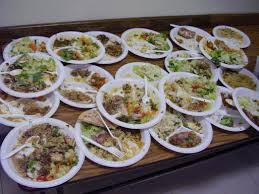
Food is an important part of every wedding and in India people will not hesitate to spend huge amount on buffet set-ups serving 250-300 different dishes according to a study from the Department of Consumer Affairs in the Delhi region in 2017. A wedding is considered incomplete without delicious food. People may not taste all the dishes and most of the food gets wasted. Lavish wedding is not limited to the rich but is part of tradition. Specially due to globalization the preferences and tastes among Indians have shifted. According to the NGO Feeding India, almost 20% of the food gets wasted from an average Indian wedding (i.e. 200-300 kgs of food waste), which amounts to USD 14 billion worth of meals.
Decorations
Decorations in the form of flowers, balloons, papers, etc. generates waste. All flowers may not be native and is preserved using chemicals which if dumped openly release chemicals to the soil. Flowers are also used for the rituals and since they are considered sacred they are usually thrown away into the water bodies, thus polluting them. Paper in the form of place cards, menus, invitations, banners, etc. are not re-usable and often discarded producing waste. Balloons are often made of non degradable materials that pose a choking hazard to birds and animals.
Single-used plastics

Single-used plastics in the form of plates, cups, cutleries, etc. often generates a significant amount of waste.
Wedding favors wrapped in plastic packaging creates waste.
Confetti

Throwing confetti on the couples is very common in weddings but these are non degradable and often ends up as waste and consumed by animals.
Attire
Wedding attire for the bride and groom can be worn only once and usually discarded or kept in storage indefinitely, thus leading to waste.
How to reduce waste in wedding venues?
One can celebrate their special day in a sustainable and eco-friendly way by adopting certain measures to minimize the impact on the environment. Nowadays eco-conscious millennials are opting for zero waste wedding, which means producing as little waste as possible in order to protect the environment. Many wedding planners are coming up with new ideas to make this special day environment friendly. Although most of the wedding décors in India are made of cloth and other materials which can be re-used by the wedding planners in other events, still there are lots of wastes that are generated from a wedding which could be minimized. Let’s see some of the ways to reduce waste:
Donating left over food
Donating left over food to charities and other organizations is a nice idea to minimize food waste. Many NGO’s in India are dealing with it. The caterers can pack left over food for the guests and also for their own families. While deciding on the menu one should think of the preferences of their guests depending on the type of guests they are inviting and should not opt for too many cuisines. The quantity of food to be prepared should also be discussed properly ahead of time. Left over food can also be turned into compost. Also one should opt for locally grown food items (farm-to-table) to avoid exploitation in the supply chain.
Sustainable decor
Using locally sourced flowers and recycled materials for decoration is a great idea to reduce waste. The flowers can be collected by the NGO’s and can be curated carefully to make dyes, compost, incense sticks, rangoli and holi colors out of it. The NGO’s can sell these products and generate funds.

Instead of printed banners, place cards, menus, etc. chalk and board can be used. One can opt for e-invites instead of printed cards. Those who cannot be reached by emails should be invited over phone calls. One can also go for other alternatives like seed paper or cotton paper for invitation card, only issue is it is slightly expensive than regular paper but that cost can be adjusted by saving on other expenditures.
Replacing single-used plastics
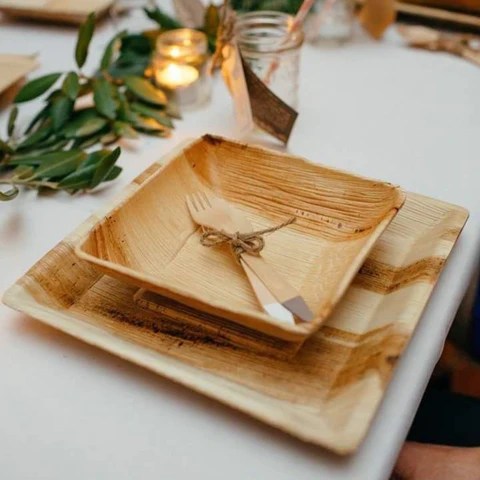
Single-used plastic cutleries, bottles, plates, glasses, etc. should be replaced with steel, bamboo, wooden and ceramic products. Disposable bamboo glasses is a good option over plastic and paper glasses. Instead of plastic and paper plates banana leaves and areca plates can be used.
Wedding favors should be kept in reusable cloth bags or paper bags instead of plastic wrapping.
Confetti
For confetti, dried flower petals can be used which are biodegradable.
Attire
Wedding attire should be made of sustainable materials like satin, silk and organic cotton. The dress should be such that one can wear it again. Renting and upcycling (wearing wedding dress of parents or grandparents) is also an option.
Apart from these one can also opt for eco-friendly cosmetics for bridal make-up and also choose a sustainable salon.
Apart from these there are many other sustainable ways one can think of for celebrating their D day. Nowadays there are zero waste wedding planners whom one can consult to celebrate their wedding in an eco-friendly way.
Initiatives to tackle wedding waste in India
There are a number of start-ups in India working towards management of waste generated from weddings.
Some of the start-ups handling left over food items from weddings are- Feeding India, Give Away, Mera Parivar, Roti bank by dabbawalas, Robin Hood Army , Annakshetra, Samarpan Foundation, R.B Shivakumar, Santi Mandiram, No Food Waste, etc. They donate the food to the needy.
Help us green a start up collects floral waste from weddings and make products like incense sticks, organic vermicompost and biodegradable packaging material through flower recycle technology.
The Bartan Company’ (TBC), a community utensil bank provides reusable steel plates and cutlery on rent for weddings.
Papla, supplies utensils made of fallen areca leaves to weddings and other parties.
Rent-a-cutlery, provides steel plates, glasses, spoons and bowls to weddings.
Like these there are so many other start-ups and organizations coming up to minimize waste from weddings and other celebrations.
Conclusion
Making wedding celebrations eco-friendly or green is the need of the hour, while still making it enjoyable and exciting. There are so many sustainable options one can opt for that will minimize waste from such celebrations and will have minimum impact on the environment. Nowadays millennials are becoming more and more eco-conscious and prefer sustainable options. Also startups are taking active steps in collecting waste and making new products out of it thus promoting circular economy.
Wedding is an occasion to create memories not trash.
 Planet Rescue 101
3 thoughts on “How to have a green wedding?”