

As the volume of waste directed to landfills continues to rise due to human activity, there is growing pressure on cities to adopt more sustainable and efficient waste management solutions. In response, the development of smart cities has prompted industries across various sectors to seek innovative ways to stay competitive while reducing their environmental impact. As the development of Artificial Intelligence (AI) has improved significantly, the use of it in waste management systems has sparked an interest. This article will explore the diverse ways in which AI is transforming waste management, while also highlighting the challenges and barriers that must be overcome in the journey toward more sustainable and efficient systems.
Introducing AI into Waste Management
Artificial Intelligence (AI) was developed to process vast amounts of information, identify patterns, and solve complex problems, making challenging tasks easier and faster to complete. Waste management, in particular, has become an increasingly urgent issue, exacerbated by rising levels of consumerism. According to the World Bank, global waste production is projected to reach a staggering 3.4 billion metric tons by 2050 — a figure that continues to climb each year.
To successfully integrate AI into waste management, industry leaders emphasize the critical role of company culture and safety in fostering effective solutions. Continuously updating and adapting AI innovations is also essential, ensuring that technologies remain relevant, efficient, and capable of meeting evolving environmental challenges. One notable example is South Korea, where the government has strongly advocated for the integration of AI into its waste management systems. By implementing advanced technologies such as smart bins and AI-driven recycling tactics, the country has significantly improved its waste management efficiency while reducing operational costs.

Through their waste management system, the Volume-based Waste Fee (VBWF), South Korea has successfully reduced daily waste by an impressive 50,000 tons over the course of 10 years. This innovative approach has positioned the country as a success story and a global role model for other nations striving to optimize their waste management practices.
Singapore is another leading example of a city that has invested heavily in AI to advance various aspects of waste management, particularly in automated sorting facilities and waste-to-energy conversion. The National Environment Agency (NEA) has collaborated with technology firms to accelerate the integration of AI into the sector. One standout initiative includes the use of AI-powered robots in recycling facilities to sort waste with high precision and efficiency. These efforts are a significant step toward achieving a circular waste management system, where materials are continuously reused and recycled, reducing the need for landfills and lowering environmental impact. Their work has been a phenomenal step to act as a model city for other regions of the planet to follow.
Leveraging AI for Smart Waste Solutions
Case Study 1: AI Applications in Waste Collection
Waste Disposal and Collection- Smart Bins
Smart bins are just bins fitted with technological features such as AI, Internet of Things (IoT) devices, and sensors. IoT devices and sensors give smart bins the ability to gain connectivity to networks and be aware of their surroundings. However, AI enables the bin to recognise, analyse, and then respond to a particular action. All these actions combined take the bins to respond fully within 3 seconds making it much more efficient than traditional waste management. These bins can reroute waste items after disposal in different compartments based on disposing of them in landfill sites, or recycling.
A community equipped with smart bins gains the power to make data-driven decisions through AI technology. These smart bins not only optimize waste collection and rerouting but also gather valuable insights—such as waste abundance patterns and disposal trends. This information empowers community leaders to make informed, strategic decisions, improving waste management and promoting a more sustainable, efficient environment.

Edinburgh, in the United Kingdom, has faced significant waste management challenges, driving the city to seek innovative solutions through smart technology. To address these issues, the City of Edinburgh Council introduced BrighterBins, smart bins equipped with real-time monitoring sensors. A total of 110,000 BrighterBins were installed across the city, resulting in a 50% reduction in overflowing bin complaints. This data-driven approach not only improved operational efficiency but also enhanced the cleanliness of the city. Residents reported higher satisfaction levels, highlighting how smart waste management can create cleaner, more efficient, and more sustainable urban environments.
Waste Collection – Predictive Collection Scheduling
The predictive collection schedule is an AI-generated system designed to optimize waste collection routes for maximum efficiency. When smart bins approach their fill capacity, sensors transmit real-time data to the central management system. The AI then analyzes this information and automatically generates optimized routes for collection trucks, prioritizing bins that are nearly full and grouping them by proximity. This intelligent coordination not only ensures timely waste collection but also significantly reduces unnecessary trips and fuel consumption. As a result, it helps minimize the carbon footprint of waste collection vehicles on a large scale, contributing to a cleaner and more sustainable urban environment.

The ONDE-UWC Project, carried out with IoTs usually in an urban area near Turin, Italy, was implemented by Cidiu S.p.A., the local waste management company. The project aimed to optimize waste collection using IoT technologies and AI-powered predictive scheduling. This approach enabled faster waste collection deployment, reduced fuel consumption, and improved coordination between garbage trucks. It also gave waste management authorities deeper insights into local waste generation patterns, leading to more efficient and data-driven operations.
Case Study 2: AI in Waste Treatment
Hazardous Waste Disposal – Contamination Detection
Hazardous waste is produced from biomedical waste, petroleum refining, construction plants, metal processing, the paint industry, and many other important production plants. After waste is collected and processed, contamination detection plays a crucial role during the treatment phase. Advanced AI models, integrated with sensors monitoring key parameters such as pH, temperature, and chemical concentrations, enable precise and real-time anomaly detection. This allows the system to swiftly identify abnormal levels of hazardous substances like xylene vapors, commonly released in the treatment of waste from paint and petroleum industries. Leveraging vast historical datasets, AI can also predict potential leaks in pipelines early, providing timely warnings that help prevent environmental contamination and ensure safer operations.
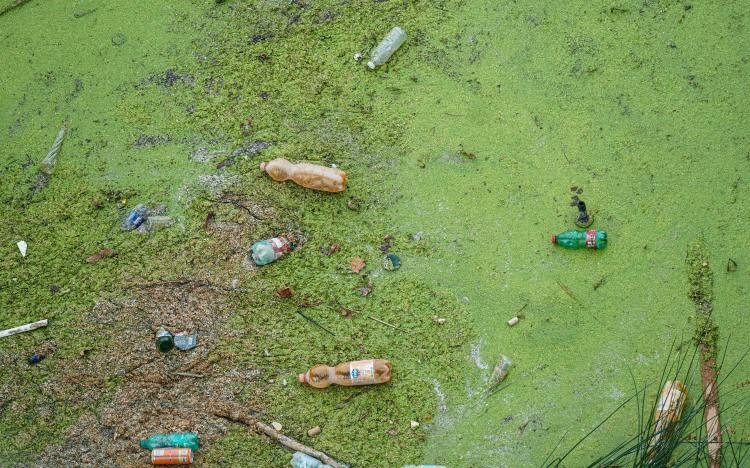
This prevents water bodies, where waste is discharged, from becoming contaminated with harmful chemicals and substances that can disrupt ecosystems and adversely affect species’ behavior and health, leading to issues such as eutrophication and pollution.
Non-Recyclables – Energy from Waste
Waste that cannot be recycled, such as mixed material items, toxic waste, synthetic materials, and contaminated items, is put through extra processing to ensure maximum waste is used. Combustion is a common method in recycling plants where waste products are incinerated to create steam, which turns the turbines and eventually creates electricity. The electricity and steam produced are biomass for later use. Many plants use AI programming in their systems to control the exact parameters, like monitoring gas, temperature, and chemicals, in this process.
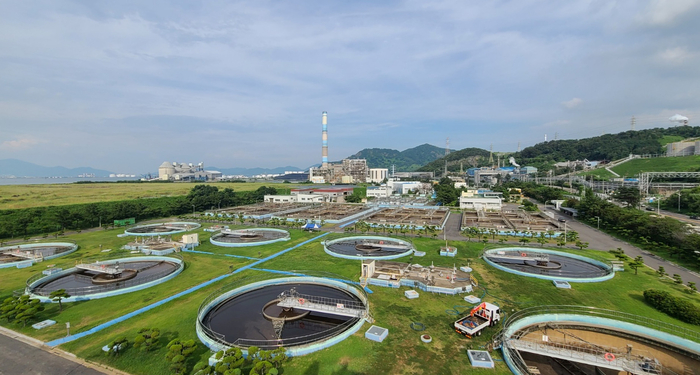
The SK Eco Plant has achieved what many waste-to-energy facilities struggle to accomplish: significantly reducing the harmfulness of certain waste emissions. This is made possible through advanced AI systems integrated directly into the incinerators. The AI algorithm continuously monitors real-time data, including pollutant levels and current temperature, and automatically adjusts airflow to maintain optimal combustion conditions. By dynamically controlling the incinerator temperature, the system ensures more complete waste burning and minimizes the release of harmful substances into the environment.
AI-Driven Solutions in Recycling
Robotics, Vision, and AI in Recycling
Robotic systems have become increasingly sophisticated and are now widely used in the recycling sector for high-precision waste sorting. These systems are integrated with advanced AI-powered technologies that enhance accuracy and efficiency. Mixed waste from commercial sources—such as businesses, factories, and offices—first undergoes pre-processing steps like shredding, flattening, and the removal of large non-recyclable materials. High-resolution camera sensors equipped with multispectral imaging (including infrared and ultraviolet spectrums) then scan each item. These cameras capture detailed data on the size, shape, color, and material composition of the waste, which is then processed by the AI system for accurate classification and sorting.
AI is often a machine learning software for deep learning, such as DELTAsort or Sorted. This AI sorts of different materials like soft and hard materials into different categories as well as scans the information on the waste materials for adding those specific brands in their database and what packaging types for data collection.
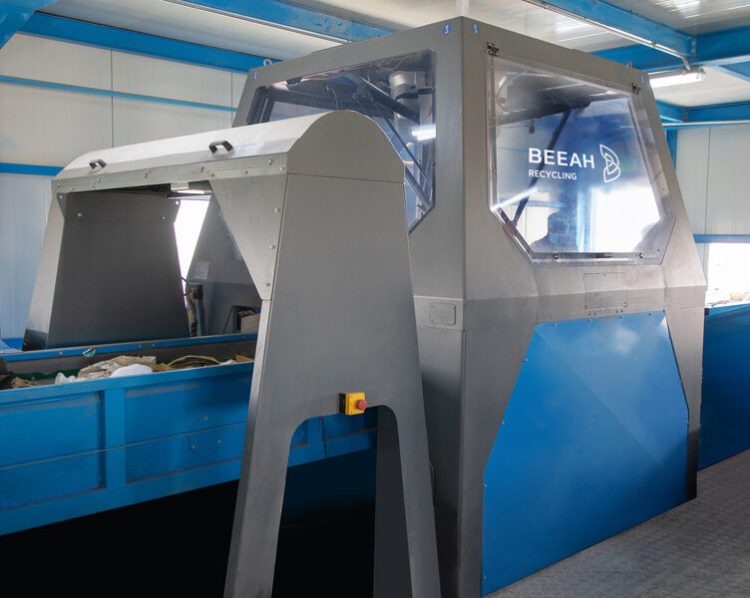
The C&I Facility, short for Commercial and Industrial waste recycling in Sharjah in the UAE, has made impressive strides towards the zero-waste targets. Unlike household municipal waste, commercial and industrial waste is more hazardous due to the presence of unknown hazardous chemicals and heavy materials. These waste materials come in more varied and dangerous forms; thus, the C&I facility is used to sort these materials.
Challenges in Implementing AI for Waste and Recycling
Currently, these bins are facing issues with cost, weather, and awareness. High-cost maintenance is needed to maintain delicate sensors, which are vulnerable to bad weather such as rain or extreme temperatures. Moreover, the effectiveness of AI-driven features—such as predictive collection scheduling or waste sorting—depends heavily on public awareness and proper use. Low understanding of the benefits of these technologies can lead to misuse or vandalism, reducing AI’s effectiveness.
AI programming has greatly enhanced the efficiency of waste management, enabling tasks such as collection rescheduling, waste sorting, and treatment to be performed more accurately and quickly. However, this efficiency comes at a cost: AI systems consume vast amounts of energy to process data and require substantial water resources for cooling servers and manufacturing hardware. According to the Global Digital Sustainability Alliance (GDSA), global water usage for AI-related operations is projected to reach between 1.1 and 6.6 billion cubic meters by 2027.
Conclusion
AI is transforming waste management by making processes like collection, sorting, treatment, and recycling faster, more efficient, and environmentally conscious. Case studies from South Korea, Singapore, Edinburgh, and the UAE highlight how smart bins, predictive scheduling, AI-driven treatment, and robotics are revolutionizing the sector. However, these benefits come with challenges, including high costs, vulnerability to weather, energy and water consumption, and the need for public awareness to prevent misuse or vandalism.
For the everyday person, this means that while AI can improve waste management, individual cooperation remains crucial. Simple actions such as properly disposing of waste, participating in recycling programs, and supporting smart waste initiatives can directly enhance the efficiency of AI systems in their community. By combining cutting-edge technology with informed citizen engagement, we can collectively reduce waste, lower environmental impact, and move toward a more sustainable future.
 Planet Rescue 101