

Globally, a total of 931 million metric tonnes food is wasted at the household, service, and retail levels. Although global food production rates have risen in the last twelve years, the world is facing a serious hunger crisis, with 345 million people expected to be food insecure in 2023. Additionally, 10% of the total greenhouse gas emissions occur from food that is produced but not consumed. In this scenario, having an effective strategy for food waste management becomes crucial.
In simple words, food waste management involves the processes of prevention, recovery, and recycling of food waste. It is important to note that food waste generation is heavily dependent on the demand and supply of food. Such demand and supply dynamics ultimately come down to consumer behaviour. To this end, the article explores how consumer behaviour can significantly affect food waste management.
Consumer behaviour and food waste management
Consumer behaviour is the study of how consumers buy, use, and dispose of products and services, as well as their emotional, mental and behavioural responses to the same. In the food supply chain, consumers are the final participants who enjoy the benefits of the products. The term consumer encompasses individuals, households, and organisations. Consumer attitude plays a significant role in shaping the preferences and behaviours surrounding food waste generation. To understand how consumer attitude influences food waste management the Theory of Planned Behaviour (TBH) can be used.
Consumer attitude
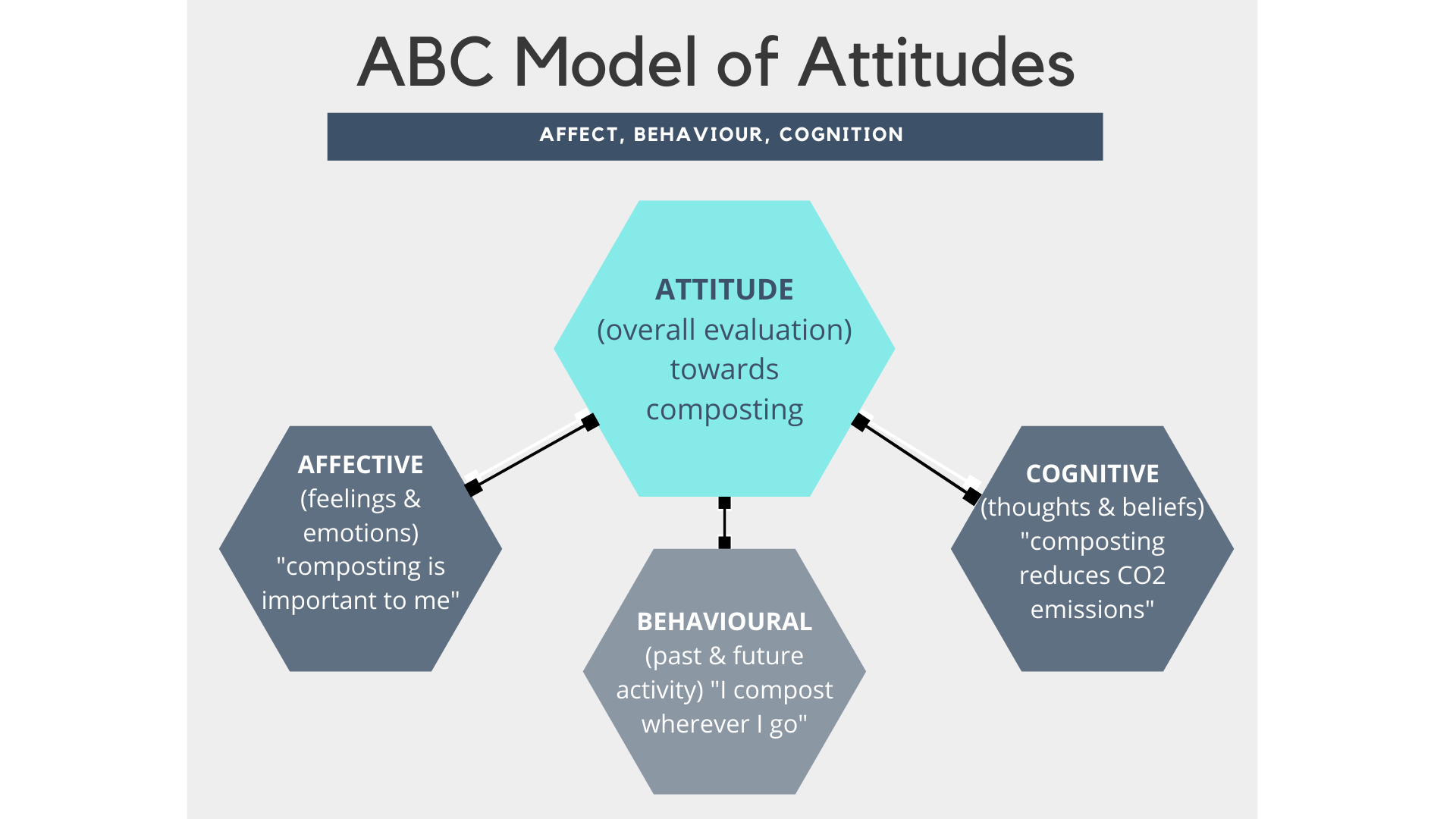
Consumer attitude, concerning food wastage, comprises three interrelated components: behavioral intentions, cognitive beliefs, and emotions. These factors influence individuals’ decisions and actions related to food consumption and disposal. The emotions associated with food items, such as the perceived freshness or appeal, play a vital role in influencing whether consumers decide to purchase, utilize, or discard them. Consumer attitude guides individuals in their decision-making process, helping them assess their needs and the appropriateness of food products before making a purchase. It is important to recognize that consumer attitude is a dynamic aspect that can evolve over time based on changes in its components. By understanding the components of consumer attitude, we can address the issue of food wastage more effectively and encourage responsible food management practices.
Affective component
The affective component of consumer attitude pertains to the emotions and feelings a consumer associates with a product. This aspect allows individuals to make purchasing decisions based on the positive or negative emotions the product evokes in them. For instance, a consumer choosing to buy eggs because it brings them a sense of “happiness” reflects the affective component of their attitude. This type of purchase behavior can contribute to food waste due to overbuying, as the actual need for the product might not be thoroughly evaluated beforehand. Reducing this behaviour this is essential to make more informed and sustainable food consumption decisions. By considering the practical aspects along with emotional responses, consumers can minimize wasteful purchases and contribute to a more responsible approach to food management.
Behavioral component
The behavioral component of consumer attitude encompasses the observable actions and behaviors individuals exhibit in response to their attitudes or beliefs about a product. This crucial aspect influences consumers to make sustainable decisions, be mindful of food wastage, and form specific food preferences. For instance, a person actively engaged in sustainable food consumption and waste management practices will make food purchases that align with their environmentally conscious lifestyle. The behavioral component shape consumer behavior to make more responsible and thoughtful choices when buying, consuming and disposing food. Emphasizing the behavioral component is essential in promoting sustainable food practices, reducing food waste, and fostering a more environmentally conscious food culture overall.
Cognitive component
The cognitive component of consumer attitude involves the beliefs and thoughts individuals hold about a product. For example, a consumer choosing to purchase organic vegetables because they believe in the health benefits and environmental sustainability reflects the cognitive component. However, it could make them potentially miss out on items that could genuinely bring them joy or satisfaction. Moreover, this approach can potentially lead to lack of engagement with the product. A balanced decision-making process can be achieved by integrating both cognitive beliefs and affective responses when making food consumption decisions. This can lead to reduced food waste, as it accommodates their actual needs and preferences. In doing so, consumers can play an active role in promoting sustainability and responsible food consumption practices.
Theory of Planned Behaviour (TPB)

It is evident that, as consumers, how we behave and interact with food has a significant effect on food waste generation and management. Developed by Icek Azjen, the theory of planned behaviour proposes that a person’s decision to engage in a particular behaviour can be based on their intention to do so. It is subjective to each and every human being and is influenced by both internal and external factors. This theory has three variables to explain human behaviour:
- Personal attitudes: These are the personal beliefs and feelings of an individual towards behaving in a certain way.
- Subjective norms: This is an individual’s perception of other people’s attitudes and behaviours.
- Perceived behavioural control: This is the extent to which an individual believes they can control their behaviour. The higher the control, the stronger the intention and effort to perform it.
Consumer behaviour and waste reduction
Consumer level wastage

United Nations Environment Programme’s (UNEP) Food Waste Index Report 2021 found that every country has a measured level of food waste irrespective of their income. Food services and retail establishments made up 5% and 2% of the total food waste, respectively, while households accounted for 11% of it. Additionally, on global per capita level, 121 kilograms of food is wasted at the consumer level where 74 kilograms came from households. These statistics reflect the importance of consumer attitude towards food consumption. Given below are the three areas where consumer level food wastage occurs:
Purchase
Over purchasing is a problematic habit where people buy more food than they can realistically consume and results in food waste and spoilage. Food waste is also a result of impulsive purchasing because the items bought may not be used to their full potential. Despite being more affordable, buying in bulk runs the risk of having goods go bad before being used. Furthermore, equally edible but less appealing foods may be rejected if expiration dates are disregarded or fruit with flawless appearances is preferred.
Consumption
Food is frequently wasted during this stage as a result of leftovers and plate waste. Food may be prepared or served by consumers in excess of what is required, leaving leftovers that may not be properly preserved or consumed later. Unfinished meals on plates contribute significantly to food waste at cafeterias and restaurants. Additionally, selective eating practices—in which people choose specific food products and discard others—lead to unnecessary waste.
Disposal
Food waste is influenced by a number of factors at the disposal stage. Some consumers could not be aware of or decide not to employ correct food preservation techniques, which can cause food to decay and be disposed. Consumers who misread date labels may throw out food before its expiration date. Additionally, instead of composting, food scraps and peels are frequently disposed of as organic waste by being placed into regular trash, which increases landfill waste. The problem of overall food waste is made worse by improper recycling of packaging materials like cans and bottles.
Impact on food waste reduction

Understanding consumer attitude and the Theory of Planned Behaviour can offer insightful suggestions for improving waste reduction and ethical food management at the consumer level. Individuals can be inspired to take meaningful steps in decreasing consumer-level food waste by targeting the three components of TPB. It is important to foster positive attitudes and actions towards reducing food waste. This can be achieved by raising awareness through education and social campaigns emphasizing the consequences of consumer food waste and how individual actions matter. This will help in creating a more responsible attitude towards purchase, consumption, and disposal.
It’s crucial to establish a normative atmosphere where appropriate food practises are supported and promoted by peers, family, and the community in order to reduce further waste. Social marketing campaigns, community initiatives and the involvement of influential individuals can serve this purpose. Taking advantage of social media to highlight positive individual practises are also an effective strategy. At its core, individuals must feel empowered and confident to undertake waste-reduction practises. Perceived behavioural control can be improved by providing practical guidance and tips for meal planning, food storage, kitchen waste recycling, and using up leftovers. Offering these practical solutions for food waste management can motivate people to improve their control over their consumption patterns.
Strategies for food waste management
At the consumer level, food waste management requires a combination of awareness, behavioural changes, and practical solutions. Given below are a few strategies:
Meal Planning
Make shopping lists based on the meals you have planned in advance. This makes it easier to buy only what is required and lowers the likelihood that additional food will be purchased and wasted. Avoid making impulsive purchases while grocery shopping. Commit to the shopping list, and before making a purchase, evaluate whether it is actually needed.
Storage and preservation
Learn the right methods for storing various foods. To increase the shelf life of food products, use airtight containers, properly wrap perishables, and keep them at the right temperature. When there is extra food that won’t be eaten right away, freeze it for later use. Items that are properly dated and labelled can be used later on without risk. Practise preservation methods like pickling, canning, or dehydrating to increase the shelf life of perishables. Check the expiration dates of your food frequently to ensure that it is consumed before it expires.
Controlled portions
In order to avoid overeating and minimise food waste from leftovers, serve reasonable portions at meals. To prevent food waste, offer extra portions or leftovers to friends, family, or neighbours. To assist people in need, think about donating any extra non-perishable or unopened perishable foods to neighbourhood food banks or charities.
Sustainable consumption
Keep a record of the food waste so that progress can be tracked over time. This can encourage individuals to make prolonged efforts towards waste reduction. Adopt the FIFO (First In, First Out) strategy while keeping food by using older things before newer ones. This guarantees that perishables are consumed before expiration. Encourage programmes that foster the consumption of “ugly” or imperfect products to cut down on food waste from food items that are still completely edible but may not look “pretty”.
Zero waste meals
Utilise leftovers in new recipes or the meals that will be prepared the following day. To make the most of meal leftovers, get inventive with the recipes. Coffee grounds, food scraps, and other unusable food waste can all be composted. Food waste can be composted to create nutrient-rich soil for gardening. Include all members of the family in efforts to reduce food waste. Educate them on the significance of reducing waste and the best practises.
Conclusion
As global food waste production increases, it is important to act at the consumer level. Consumer behaviour can significantly affect the amount of food waste that is produced and its subsequent management. Theories like the Theory of Planned Behaviour provide insights into how consumer behaviour impacts food waste management and how various strategies and approaches to waste management can be useful. It is essential to modify and create new behavioural norms that offer more sustainable practises for consumer-generated food waste management.
 Planet Rescue 101
2 thoughts on “Does consumer behaviour affect food waste management?”